Happy Holi
Rang Barse Bheege chunarwali rang barse! Happy Holi to all! Have a colourful day ahead!Labels: Festive celebration

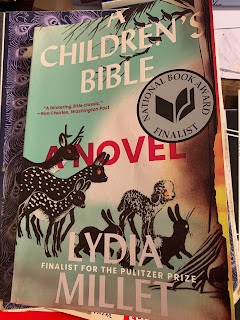
Labels: Book Review
Books are our best friends, constant teachers and a window to the outside world. Reading enables one to meet different characters, gain a new perspective and revitalises ones mind. In honour of world book day today!Labels: World Book Day

Labels: Movie review
http://www.ndtv.com/article/cities/student-allegedly-stabs-teacher-to-death-in-school-for-being-strict-174779
Labels: Social issue
In the beginning, the Lord created chocolate, and he saw that it was good. Then he separated the light from the dark, and it was better.Labels: Chocolate day

Labels: Travel
Three-storey-high Buddha statues, stupas and monasteries that look like they have been cut out from fairytale books and yaks with floor-sweeping hair are some of the unusual sights you see when you visit Ladakh, says Swetha AmitWe had an early start as we had a long drive up the mountains ahead of us. It was a sunny day. We noticed something unusual; the mountains seemed to change colour as we drove along. As we climbed the steep passes, we realised how difficult it would be for bikers who were passionate about exploring these steep mountain paths. Approximately four hours later, we reached the Khardungla Pass.
On top of the world: A cold gust of wind greeted us as we got out of our vehicles. It was about 18,380 feet above sea level. We were on the highest motorable road in the world. The signboard was decorated by little flags which symbolised the Buddhist culture. We were awed by the magnificent view. All around us were snow-capped mountains, which looked even more beautiful in the bright sunlight. It was fascinating to see the interplay between sun and snow. We walked around a bit, drinking in the 'on top of the world' feeling. Nearby was a small temple dedicated to Lord Shiva. Tea stalls serving hot beverages, biscuits and Maggi were comforting in the cold weather. We met a few bikers who were exhilarated after a wonderful ride from Kargil.
Bon appetite: After a couple of hours, we stopped for lunch at a small place tucked away in the mountains. Run by the Ladakhis, they served piping hot momos - a famous Tibetan dish made out of corn flour, steamed vegetables and meat. This is a local delicacy which is eaten as the main course. They served Maggi and Tibetan soup which were very welcome in the cold, making us realise that it was the simplest things in life that gave us the greatest pleasure.
Mountains, sand dunes and streams: As we descended from the pass, the beautiful Karakorum Range came into view. The Khardung village fields were lush with crops. Further ahead, the stunning view of the Shyok Valley soon gave way to a glimpse of the Shyok River. When water levels are low, the river appears like small streams that run parallel to one another. The banks were covered with dense bushes offering us tantalising glimpses of the river. We drove past the Diskit Gompa which we were scheduled to visit the next day. We passed several other villages, and were soon rewarded with a spectacular view of sand dunes. It was fascinating to see sand dunes, mountains and streams together.
A bumper ride on the double humps: As we walked amidst the dunes, the silence was disturbed by the sound of bells. Turning around, our jaws dropped in amazement. A herd of Bactrian double-humped camels were trotting towards us. The camels had a double hump, were shorter in structure and had broader legs than regular camels, and had abundant hair on the neck and knees. We mounted the camels and were taken around for an hour. We soon got into an animated conversation with our camel tender who said that these species were exclusive to Ladakh. After the ride, we walked to our camps.
In nature's lap: Strolling down a pebbled pathway we were pleasantly surprised to see bright white tents, one of which was reserved for us. The secluded tent overlooked a garden of fresh vegetables and sunflowers. The entire place was well maintained. Meals were cooked with vegetables plucked off the camp vegetable garden.
It was around five in the evening and the chill set in. Grabbing our jackets, we decided to take a stroll around the village escorted by a guide. We learnt that the India-Pakistan border was about 70km away and that there was an army base camp in the vicinity. We were told about the numerous trekking trails, which would require a minimum of three days. The village appeared deserted. However, the main road found us in the company of a few school children returning home. They were sweet enough to oblige us with a few photographs. It was getting dark and we headed back to our camp. Our cosy tents were well equipped with warm beds and attached rest rooms. After dinner, we were lulled to sleep by chirping insects outside our tent.
Gompa on a rocky ridge: After a good night's sleep, we drove back to Leh. En route we stopped to visit the Diskit Gompa. This is the oldest and largest Gompa in the Nubra region. The statue of Maitreya Buddha is majestically seated on the ridge of a mountain that overlooks the valley below. Steps lead to the entrance of the Gompa, which pass through the monks' living quarters.
Dashing through the snow: The cloudy weather that morning was in stark contrast to the sunny skies that smiled the day before. As we drove along the winding roads, we spotted fresh snow on rocks. Delighted at seeing snow at such close quarters, we got out of our cars to play. As we finished our lunch of momos, we saw drops of water on the windshield. To our delight, we were told that they were snowflakes. We stepped out to feel the soft flakes of snow, a novelty for seashore dwellers like us. Continuing our drive through snow flurries, we reached our hotel by dusk. We were scheduled to visit the mystical Pangong Lake the next day.
Cost
The cost for a camel safari is Rs150 per person for 15 minutes.
Camping in Nubra Valley would cost Rs3,000-4,000 per person, meals included.
Essentials and guidelines
Remember to take sufficient warm clothing as the temperature dips unexpectedly.
A torch is essential with the high frequency of power cuts.
Carry necessary medication. The high altitude and bumpy roads can make you sick.
One can go to Zanskar instead of camping overnight in Nubra Valley. It offers an exciting river rafting experience. The cost is Rs2,200 per person.
Labels: Travel

Some places offer exciting wildlife, while others are known for their bountiful beaches and tropical weather. A few boast magnificent sand dunes and others leave you gaping in awe at their mighty mountains. Serenity and awe battled for dominance as we drove past barren terrains, mountain passes at an altitude of 18,000 feet above sea level and lonely monasteries in a wonderful land called Ladakh.
A vast wall of mountains greeted us as we drove down from the airport to our hotel. We were allowed a few hours of rest after our long journey to the Himalayan destination. We were told that we would require some time to acclimatise ourselves to low oxygen levels in Leh. We set off in the evening to explore Shanti Stupa and the Leh Bazaar.
Sojourn with serenity: The Shanti Stupa was built by Japanese Buddhists to promote peace, and inaugurated by the Dalai Lama in 1983. It was a steep climb to the stupa. Surrounded by mountains and glistening in the setting sun, the stupa was a treat for the sore eyes. Symmetrical in shape, the stupa had a statue of Buddha standing guard. After paying homage, we walked around the area taking in the picturesque surroundings. We could see the entire village of Leh from there. After clicking a few photographs, we proceeded towards Leh Bazaar.
Souvenirs and shops: Leh Bazaar bustled with activity. Many shops sold souvenirs, caps, shawls and Buddhist prayer bells. We noticed that the locals resembled Tibetans. Not surprisingly, many of the residents had migrated from Tibet years ago. They were simple folk, friendly, and peace-loving.
The souvenir shops had statues of Buddha in all shapes and sizes, prayer bells, purses, T-shirts portraying the pride of Ladakh, jewellery and caps. We were taken aback by the prices; most of the items cost Rs500 or more. They seemed overpriced, but careful selection gave us our money’s worth. We then headed back to the hotel for a good night’s sleep.
Carving of the five Buddhas: We set off on a spiritual quest the next day. Ladakh is famous for its monasteries, and there is history attached to each. We drove down winding roads in sight of mountains in various hues, like an artist’s wide strokes on canvas. Our first stop was the Shey Palace. It was one of the ancient capitals of Ladakh. As we approached the palace from Leh, we spotted the spectacular rock carvings of the ‘Five Buddhas’. They were carved in the early Indian Buddhist style and are credited to King Nyimagon. The palace gompa (monastery) contains an 8-metre statue of Sakyamuni Buddha. When we entered the sanctuary, we were actually entering the second floor and found ourselves at the level of the statue’s shoulders. The walls were decorated with paintings. Beyond the palace is a small group of stupas or chortens. Each had a design with a symbolic meaning. Those who wished to stay the night in Shey had several guesthouses to choose from.
Exotic gompa: As we approached Thikse, we saw a sight which was probably close to illustrations in fairy tale books. The vibrancy of the multi-coloured structure left us awestruck. It looked exactly how an exotic gompa would look like in our imagination. Built across the slopes, it resembled a village in itself.
The gompa was famous for a beautiful giant statue of Maitreya. Maitreya is the Buddha of the next age, popularly known as the ‘Future Buddha’. Here, as in Shey, we entered on the second floor and found ourselves standing level with the statue’s shoulders. The statue, made of terracotta bricks and clay and painted gold, is 12 metres tall. We paid our homage but were not allowed to pose alongside the statue. As we climbed up, we found prayer bells on the way, which we rotated chanting the Buddhist mantra. At the top, we enjoyed a magnificent view of the Indus valley before descending.
The gompa of vibrancy: Situated in a small side valley in the Stok range was the Hemis Gompa. It is quite close to the village of Hemis. This is the most famous gompa in Ladakh, where the annual Hemis Gompa festival is held during the summer months of June-July. The festival features a dance drama called ‘Chams’ performed by monks in colourful robes and grotesque masks.
It was an elaborate structure with painted verandas protruding from the upper floors. A row of prayer wheels went up the steps leading to the main area where the deities were present. We paid our respects to the beautiful statue inside and visited the treasury below, which had different statues and objects representing Buddhism. We also visited the souvenir shop for gifts.
School of monks: On the way back to Leh, we visited a school affected by the cloudburst that occurred in August 2010. The school, where the famous Bollywood movie ‘3 Idiots’ was filmed, had a resplendent sunflower garden. Some of the monks obliged us by posing for photographs.
We learnt that anyone could become a monk irrespective of age, but that they need to be well versed in Buddhism which was taught in the schools. Restoration was on at parts that were most affected by the floods. After an interesting day, we headed back to our hotels to get a good night’s rest before proceeding to Nubra Valley the next day.
How to reach Leh
By air: Several airlines operate from Delhi, Jammu and Srinagar.
By road: Adventure lovers usually opt for the road journey from Delhi, Srinagar and Manali. There are several buses operating from these places.
Best time to visit
The best time to visit Leh would be between the months of June and September. In winter, the temperatures often dip below zero degrees.
Cost
A week’s stay in Leh would cost anywhere between Rs18,000-25,000 per person, excluding airfare.
One can also opt to camp in Nubra Valley, Pangong Lake or any of the monasteries. The cost would range from Rs3,000-4,000 per person, all meals inclusive.
Essentials and guidelines
One must adhere to monastery rules and maintain silence while visiting the gompas.
Do not take photographs along with the statues of Buddha as it is considered offensive.
Remember to take sufficient warm clothing as the drive up the mountain passes can be extremely cold with snowfall.
Frequent power cuts are common in Leh; a torch will be useful if one decides to camp overnight.
Labels: Travel
http://ibnlive.in.com/news/abandoned-baby-critical-cops-hunt-for-kidnappers/224859-3.html
Labels: News